Murray House Stanley Hong Kong: Colonial Heritage, and What Is Inside Today
Murray House Stanley stands as one of Hong Kong's most remarkable colonial heritage treasures, representing an extraordinary feat of architectural preservation and cultural continuity. This magnificent three-story Victorian building, constructed in 1846 during the early years of British rule, offers visitors an immersive journey through Hong Kong's colonial past while serving today as an art and community events venue a few minutes' walk from the heart of Stanley Market.
🏛️ Quick Facts About Murray House Stanley
Historic Colonial Heritage: Murray House stands as a magnificent testament to Hong Kong's colonial past, having been originally constructed in 1846 during the early years of British rule, making it one of Hong Kong's oldest surviving colonial structures. The building represents not just architectural history but also the story of Hong Kong's transformation from a small fishing village to a major international trading port, carrying within its walls nearly two centuries of cultural heritage and historical significance.
Remarkable Preservation Journey: The building's extraordinary relocation story from its original location at Battery Path in Central Hong Kong to its current position in Stanley represents one of the world's most ambitious architectural preservation projects, requiring twenty years (1982-2002) to complete the stone-by-stone dismantling, storage, and reconstruction process. This incredible feat of cultural preservation ensures that visitors today experience the same architectural splendor that colonial officers enjoyed over 170 years ago, making Murray House a living bridge between Hong Kong's past and present.
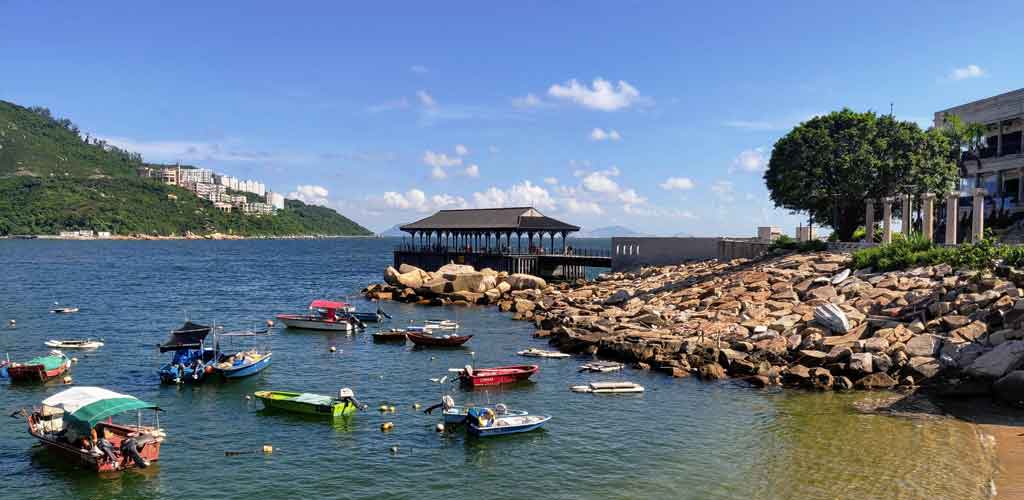
Modern Cultural Destination: Today the building is empty of commercial tenants. Its restaurants and shops closed in April 2024 and nothing has traded inside since; the space is now used for art and community events. What is left is worth the walk on its own terms: a three-storey Victorian building with verandahs built for the tropics, standing where the market meets the waterfront, with Blake Pier a few steps away.
Authentic Victorian Colonial Architecture: The building showcases pure Victorian Colonial architectural style, featuring characteristic elements such as wide verandahs designed for tropical climate comfort, elegant arched windows that maximize natural light and ventilation, and robust masonry construction that demonstrates the sophisticated building techniques of the 1840s. These architectural features create an authentic historical environment that transports visitors back to the golden age of British colonial Hong Kong, offering a rare opportunity to experience living history.
The Remarkable History of Murray House
Murray House represents one of Hong Kong's most impressive architectural preservation stories. Originally constructed in 1846 at Battery Path in Central Hong Kong, this Victorian colonial masterpiece served as military officers' quarters during the early establishment of British Hong Kong. Named after Sir George Murray, the Secretary of State for the Colonies, the building witnessed the transformation of Hong Kong from a small trading post into a major international port.
When urban development pressures in Central Hong Kong necessitated the building's removal in 1982, the Hong Kong government undertook an unprecedented preservation project. Every single stone, beam, and architectural element was carefully catalogued, numbered, and stored for twenty years. In 2002, Murray House was meticulously reconstructed at Stanley using the original materials and traditional building techniques, creating a perfect replica that maintains the building's historical integrity while giving it new life as a heritage and cultural venue.
📅 Timeline of Murray House Stanley
1846 - Foundation of Colonial Legacy: The original construction of Murray House at Battery Path in Central Hong Kong marked the beginning of an architectural legacy that would span nearly two centuries, representing the British colonial administration's commitment to creating dignified accommodations for military officers during Hong Kong's early development. Named after Sir George Murray, the Secretary of State for the Colonies, this building became a symbol of British administrative presence and architectural ambition in the newly acquired territory.
1846-1982 - Centuries of Colonial Service: For over 136 years, Murray House served continuously as military officers' quarters and later as government offices, witnessing Hong Kong's transformation from a small trading outpost to a major international financial center. During this period, the building housed countless colonial administrators, military personnel, and government officials who shaped Hong Kong's development, making it a silent witness to pivotal moments in the territory's history including both World Wars, political changes, and social transformations.
1982 - The Great Preservation Decision: When urban development pressures in Central Hong Kong necessitated the building's removal, the Hong Kong government made the remarkable decision to dismantle Murray House stone by stone rather than simply demolishing this architectural treasure. This unprecedented preservation commitment involved meticulously documenting, numbering, and cataloguing over 3,000 individual stones and architectural elements, demonstrating Hong Kong's growing appreciation for its colonial heritage and commitment to cultural preservation.
1982-2002 - Twenty Years of Patient Preservation: During this remarkable two-decade period, all materials from Murray House were carefully stored and maintained while plans were developed for the building's reconstruction, representing one of the longest and most ambitious architectural preservation projects in Asian history. This patient approach ensured that every detail of the original building could be faithfully recreated, from the smallest decorative elements to the massive foundation stones, preserving not just the building's appearance but its authentic historical character.
2002 - Rebirth at Stanley: The meticulous reconstruction of Murray House at Stanley using original materials and traditional building techniques marked the successful completion of this extraordinary preservation journey, creating a perfect replica that maintains complete historical integrity while giving the building new life in a beautiful waterfront setting. This rebirth transformed Murray House from a potentially lost piece of history into an accessible cultural treasure that continues to educate and inspire visitors about Hong Kong's colonial heritage.
2024-2026 - Standing Empty: The building's last restaurants and shops closed in April 2024, and its commercial floors have stood empty since. Link REIT has since used the building for art and cultural programming, and the public areas host occasional events and installations. Visitors still come for the architecture, the verandahs and the waterfront setting, a few minutes' walk from the market.
Architectural Marvel and Cultural Significance
Murray House Stanley showcases exceptional Victorian colonial architecture that represents the architectural preferences and building techniques of 1840s Hong Kong. The three-story building features distinctive colonial elements including wide verandahs, high ceilings designed for tropical climate comfort, elegant arched windows, and robust masonry construction that has withstood nearly two centuries of use.
The building's architectural details reflect the colonial administration's desire to create familiar European-style accommodations adapted to Hong Kong's subtropical climate. Features such as the expansive covered verandahs provided essential shade and ventilation, while the elevated ground floor design helped protect against flooding and improved air circulation. The thick stone walls and substantial timber framework demonstrate the high-quality construction standards of British colonial architecture.
Heritage Preservation Achievement
The successful relocation of Murray House represents one of Hong Kong's most significant heritage preservation achievements. This massive undertaking required:
Unprecedented Documentation and Record-Keeping: The relocation project began with the most comprehensive architectural documentation ever undertaken in Hong Kong, involving teams of historians, architects, and preservation specialists who photographed, measured, and catalogued every single architectural element before dismantling began. This meticulous process created a complete three-dimensional record of the building that served as the blueprint for perfect reconstruction, ensuring that even the smallest decorative details and structural relationships would be preserved with absolute accuracy. The documentation process alone took several months and generated thousands of photographs and technical drawings that captured the building's architectural complexity.
Masterful Stone-by-Stone Preservation: The physical dismantling process represented an extraordinary feat of precision and patience, as over 3,000 individual stones, beams, fixtures, and architectural elements were carefully removed, numbered with a sophisticated coding system, and stored in climate-controlled environments for two decades. Each stone was treated as a precious artifact, wrapped and protected to prevent damage during storage, while detailed records tracked the exact position and relationships of every element within the building's structure. This level of care ensured that no historical detail would be lost during the long preservation period.
Authentic Traditional Reconstruction Techniques: When reconstruction began at Stanley in 2002, traditional building techniques and original materials were employed to maintain complete historical authenticity, including the use of period-appropriate mortar, traditional joinery methods, and restoration of original hardware and fixtures. Master craftsmen with specialized knowledge of Victorian colonial construction techniques were brought in to ensure that the rebuilding process honored the original building methods, creating not just a replica but a genuine continuation of 1840s colonial architecture. This commitment to authenticity extended to every aspect of construction, from foundation work to roofing installation.
Successful Cultural Continuity: The remarkable success of Murray House's relocation lies in its ability to maintain complete historical character and architectural integrity while adapting to a new use as a space for art and community events. The building continues to educate visitors about Hong Kong's colonial heritage while providing contemporary amenities and services, demonstrating that historical preservation and modern functionality can coexist harmoniously. This balance between preservation and adaptation has made Murray House a model for heritage conservation projects throughout Asia, showing how historical buildings can remain relevant and useful in contemporary society.
Inside Murray House Today: Empty Since April 2024, and Where to Eat Instead
There are no restaurants inside Murray House. The building's commercial floors have stood empty since April 2024, when the last tenants (a German restaurant, a steakhouse and a fashion store) closed, and the space is now used for art and community events. What follows is about the building itself, and about four places within a five-minute walk, so that a visit built around a meal does not end at a closed door.
Shop 202, 2/F: King Ludwig Beerhall, the German beerhall that formerly occupied this unit, shut in April 2024 and is no longer trading.
Where to Eat Instead, Within Five Minutes
None of the four is inside the building. All four are within a five-minute walk of Murray House and the market, and between them they cover the four things a visitor usually wants: a table you can book for a group, a small room for a proper dinner, a waterfront pub with no booking at all, and a cheap local institution that shuts at lunchtime. This page prints no opening hours for the first two because the booking channels disagree; where that matters, phone.
🍽️ Four Places to Eat, Five Minutes Away
Beef & Liberty Stanley: Burgers and a relaxed, high-ceilinged room on the ground floor at Stanley Plaza (Shop G04, 23 Carmel Road; 2563 2085), with a frontage that opens onto the plaza rather than the water. It is the one place on this list a group of six can reliably book, and the operator's own advice is to reserve in advance to avoid disappointment; at weekends, book before you set out.
Henry's (formerly Lucy's): Mediterranean cooking in a small lemon-yellow room at 64 Stanley Main Street (2813 9055), forty seats and a jazz playlist: the upscale end of the four, and the one to book for dinner rather than a quick lunch. It is the same premises that traded for years as Lucy's, renamed in 2017. It closes on Mondays, and the detailed hours differ between listing sites, so phone if you are crossing town.
Smugglers Inn: A British-style pub at 90A Stanley Main Street (2813 8852), with wooden beams, banknotes papered over the ceiling and licensed tables on the waterfront itself: the only one of the four where you sit looking at the harbour. It is a pub rather than a table-service restaurant, so you order and pay at the bar, the food is bar food (burgers, fish and chips, sandwiches), and there is no booking channel; you simply walk in.
Si Yik, and What to Know Before You Go
- Si Yik, 2 Stanley Market Road (2813 0507): the cheap, authentic end, a dai pai dong inside the market. Cash only, no reservations, open at 6am. On weekdays it shuts at 12.30pm and it is closed on Tuesdays; the 1.30-4pm afternoon session runs Friday to Sunday only. Treat it as breakfast or an early lunch, never as an afternoon stop.
- Booking: Beef & Liberty and Henry's take reservations; Smugglers Inn and Si Yik take none. Henry's seats forty and closes on Mondays, so book the dinner rather than walking up.
- Hours this page does not print: for Beef & Liberty and Henry's the booking channels disagree on the closed day and the closing time, so you get phone numbers here (2563 2085 and 2813 9055) instead of a grid that may be wrong.
- Cash: Si Yik is cash only, so bring notes for the market end of this list.
- Anything else you read: guides that put restaurants inside Murray House are describing a building that has had no commercial tenants since April 2024. The four places above are where the food is now.
Cultural Events and Activities at Murray House
Murray House is run as an art and cultural venue, not as a visitor attraction with a programme. Link REIT announced on 27 March 2025 that it was hosting and funding the transformation of Murray House into an art and cultural hub, and what that has meant in practice is occasional exhibitions, workshops and ticketed events in a Victorian building with no published calendar and no standing programme.
Heritage Tours and Educational Programs
No operator publishes a heritage tour of Murray House, and there is nowhere to book one. The by-appointment tours older guides mention were the Hong Kong Maritime Museum's, and that museum left the building in February 2013; Link REIT publishes no tour product of any kind, and its only published route to an answer is a customer-service hotline, 2813 4623 or 2122 9000. What exists instead is a Stanley walk rather than a building tour: HKFYG's Stanley Stories interactive tour, which names Murray House as one of its seven stops and is booked through HKFYG.
There is no school or university programme either. No curriculum resource, education officer or group booking channel is published by the owner or by anyone else, which is an absence of a published programme rather than a rule against bringing a class. What a class can use is the building itself, covered in the photography and architecture section further down this page; the last workshops of that kind here were part of Design Trust Futures Festival 2025, listed under Special Events below.
Special Events and Celebrations
What the building has actually hosted is dated one-offs, not a regular fixture. Carnaby Fair's Murray Summer took over the building on August weekends in 2025, with free general admission and ticketed activities, and a ticketed, 18-plus Murray House Takeover ran on 22 August 2026. Both dates are past, and nothing later than 22 August 2026 is on record.
- Wedding photography: people come here to photograph weddings, a practice the owner itself noted in 2014, when it called Murray House and the plaza a wedding photo location of choice. It is something you will see from the plaza and the promenade, not a service anyone sells.
- Christmas market: Stanley Plaza's tenth annual Merry Gingermas market ran from 19 to 28 December 2025, 12 noon to 8pm, and Murray House was one of its locations along with the plaza amphitheatre and the promenade. The market is the plaza's; the building is a stop on it.
- Art exhibitions (2025): Design Trust Futures Festival 2025 put five key exhibitions and public-space installations into the building between 29 March and 18 June 2025, alongside workshops and community tours. It has ended, so treat it as the last exhibition programme there rather than a gallery you can turn up at.
Plan on the outside rather than the inside. No shop or restaurant has traded inside the building since April 2024, and by 22 October 2026 hoarding had blocked off much of the structure, so plan on seeing it from the outside unless an event is using the space. What repays the walk is the fabric: granite columns, wide tiled verandahs, and the building's stones taken down in 1982 and put back together on this waterfront, with Blake Pier alongside.
Visiting Murray House Stanley: Practical Information
Murray House Stanley is easily accessible and offers visitors multiple ways to experience this heritage treasure. Whether you're interested in the historical architecture, the art and community events, or the Blake Pier waterfront, planning your visit ensures you make the most of this unique destination. What the bus and taxi actually cost is on our Stanley Market prices and bus fares page.
🚌 Getting to Murray House Stanley
- Bus Route 6: Direct service from Central to Stanley (45 minutes)
- Bus Route 260: From Central Star Ferry Pier (40 minutes)
- Taxi: From Central Hong Kong (30 minutes, HK$80-120)
- Private Car: Limited parking available at Stanley Plaza
Access and House Rules
- Inside the Building: No shop or restaurant is trading inside Murray House; the commercial floors have stood empty since April 2024
Best Times to Visit Murray House
Timing your visit to Murray House can significantly enhance your experience:
- Weekday Mornings (10:00 AM - 12:00 PM): Quietest time for photography and architecture appreciation
- Midday (12:00 PM - 2:00 PM): The busiest stretch on Stanley Main Street and in the market lanes; the building's covered verandahs give shade if you want to sit still
- Late Afternoon (4:00 PM - 6:00 PM): Golden hour lighting ideal for photography
- Evening (6:00 PM - 9:00 PM): Murray House is not a dinner venue; the evening meal belongs to Stanley Main Street or Stanley Plaza, both a few minutes' walk away
Photography and Architecture Appreciation
Murray House Stanley offers exceptional photography opportunities that capture both the building's architectural details and its integration with the modern Stanley waterfront. The contrast between 19th-century colonial architecture and 21st-century Hong Kong creates compelling visual narratives for photographers and architecture enthusiasts.
Key Photography Points
- Front Façade: Classic colonial architecture with modern Stanley Market backdrop
- Verandah Details: Intricate Victorian-era architectural elements and stonework
- Interior Spaces: Period architectural features; whether you can get inside depends on what event or installation is using the space that week
- Harbor Views: Murray House framed against Stanley Bay and surrounding hills
- Evening Illumination: Building lighting creates dramatic nighttime photography opportunities
Architectural Elements to Appreciate
Visitors interested in colonial architecture will find Murray House a treasure trove of design details:
- Stone Construction: Original 1846 stones showing weathering and craftsmanship
- Tropical Adaptations: Wide verandahs and high ceilings designed for Hong Kong's climate
- Victorian Details: Ornate window frames, decorative stonework, and period proportions
- Preservation Techniques: Evidence of the careful reconstruction process and heritage conservation methods
Murray House in Context: Stanley Market Heritage Trail
Murray House anchors a broader heritage experience in Stanley that includes several other historically significant buildings and cultural sites. Visitors can combine a Murray House visit with exploration of Stanley's other colonial and traditional Chinese heritage elements, relaxation at Stanley Main Beach, and culinary experiences through a comprehensive Stanley Market food tour.
Stanley Heritage Walking Route
A self-guided walk round Stanley can include:
- Murray House (1846): Colonial officers' quarters, now an empty building used for art and community events
- Blake Pier (1900s): Traditional Chinese pier architecture
- Tin Hau Temple (1767): One of Hong Kong's oldest temples dedicated to the sea goddess
- Stanley Cemetery: Colonial-era burials and historical graves
- Old Stanley Police Station: Colonial law enforcement architecture
Cultural Integration with Stanley Market
Murray House's location within Stanley Market creates unique opportunities for visitors to experience both colonial heritage and contemporary Hong Kong culture:
- Heritage Walk then Market Lunch: See the colonial architecture, then eat on Stanley Main Street or in the market
- Cultural Contrast: Victorian architecture alongside Chinese temples and modern shopping
- Photography Opportunities: Historical buildings and vibrant market life in single location
- Educational Value: Understanding Hong Kong's multicultural development through architecture and commerce
- Beach and Waterfront Access: Easy walking access to Stanley's premier beach destination
Planning Your Murray House Stanley Experience
To maximize your visit to Murray House Stanley, consider combining heritage appreciation with Stanley Market's other attractions. This approach allows you to experience multiple aspects of Hong Kong culture while enjoying one of the territory's most beautiful colonial buildings.
Half-Day Murray House and Stanley Itinerary
- 10:00 AM: Arrive at Stanley via Bus 6 from Central
- 10:30 AM: Walk the plaza frontage and the promenade for the granite columns and the tiled verandahs, and stop where people photograph the building; this is a walk-past, not a tour
- 12:00 PM: Lunch at Stanley Plaza or Stanley Main Street
- 2:00 PM: Explore Stanley Market for shopping and street food
- 3:30 PM: Visit Tin Hau Temple and Blake Pier
- 4:30 PM: Stanley Beach walk and relaxation
- 5:30 PM: Return bus to Central Hong Kong
Special Interest Visits
Different visitors come for different things:
- Architecture Students: the construction details are all on the outside: granite columns, tiled verandahs, and a three-storey structure that was dismantled in 1982 and rebuilt on this waterfront
- History Enthusiasts: Hong Kong's colonial period is legible in what happened to this building, which was dismantled in 1982 and rebuilt stone by stone on the Stanley waterfront
- Food Tourists: The four places listed above, all within a five-minute walk of the building
Murray House Stanley is a building rather than a restaurant, and it is worth an hour of anyone's day. The architecture is the attraction: three storeys of verandahs and granite, dismantled in 1982 and put back together on this waterfront, with Blake Pier alongside and the market a few minutes inland. Come for the structure and for whatever art or community event is on, then eat at one of the four places above rather than looking for a table inside.
This extraordinary heritage destination continues to serve as a symbol of Hong Kong's commitment to preserving its architectural legacy while adapting historical buildings for contemporary use, making Murray House Stanley an essential stop for anyone seeking to understand Hong Kong's rich cultural heritage and colonial history.